










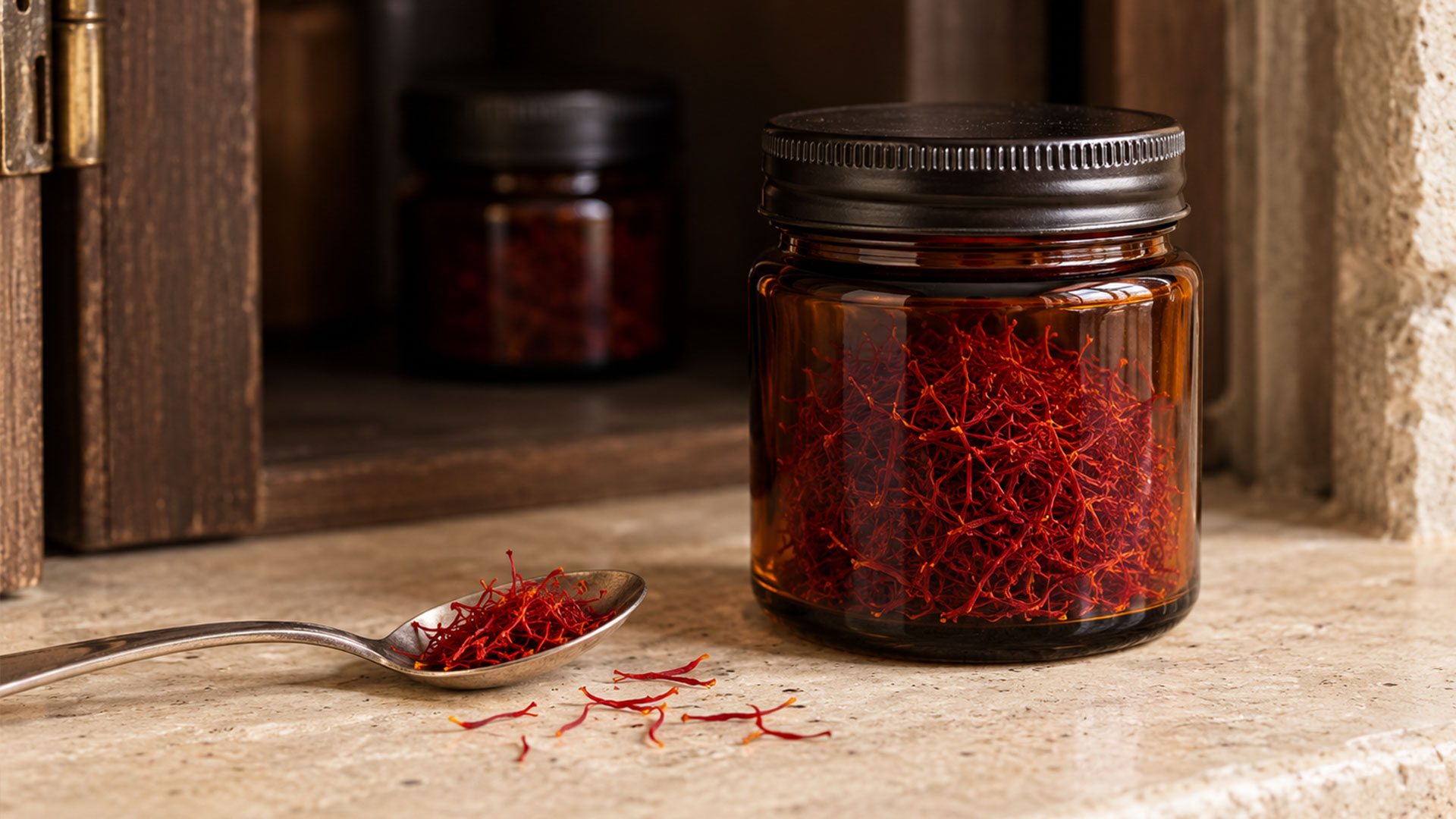
How to Store Saffron Properly: Three Useful Tips
Saffron can keep its characteristic color, aroma, and taste for a considerable time, but only when its storage conditions protect the product from moisture, light, heat, contamination, and unnecessary exposure to air. Learning how to store saffron properly is therefore more than a housekeeping matter. For importers, distributors, retailers, food manufacturers, and restaurants, it helps protect ingredient performance and reduce avoidable losses. The basic principle is straightforward: keep saffron in suitable sealed packaging, in a cool, dry, dark, and stable environment, and handle opened stock carefully.
Good storage also supports better purchasing and inventory decisions. JAM Food Co. supplies different grades of saffron for buyers evaluating products for resale, food production, or food-service use. This makes the company a relevant supplier to consider when discussing product requirements. Whatever grade a buyer selects, its condition after delivery will depend partly on how it is received, stored, opened, and moved through operations. A sound storage procedure helps preserve the qualities the buyer paid for and makes it easier to assess future orders against consistent handling conditions. The sections below translate that principle into practical controls for commercial users.
Why does proper Saffron Storage Matter?
Saffron’s commercial performance is closely tied to three groups of compounds. Crocin is associated with coloring strength, picrocrocin with taste, and safranal with aroma. These qualities matter differently depending on the application: a food manufacturer may need consistent coloring from batch to batch, while a restaurant may pay particular attention to aroma and taste. Storage cannot improve a weak or damaged lot, but poor conditions can reduce the value of a good one. Light, heat, oxygen, and moisture can contribute to changes in saffron over time, so protection needs to continue after purchase.
There is also a food-handling reason to take storage seriously. Saffron is a low-moisture spice, yet it can reabsorb water from humid air if packaging is left open or does not provide a suitable barrier. That can lead to clumping, musty odors, visible mold, or other signs that require investigation. At the same time, loss of aroma does not automatically prove that saffron is unsafe, and a deep red appearance does not confirm safety or specification compliance. Business buyers should therefore separate sensory quality checks from food-safety decisions and manage questionable stock through their established control procedures.
How to Store Saffron Properly?
First Tip: Choose suitable protective packaging
The right saffron storage container is clean, dry, suitable for food contact, and able to remain securely closed. It should limit the entry of moisture and contaminants while protecting the contents from light. Airtight glass jars and well-designed rigid containers can work, but material names alone do not determine performance. Closure integrity, light protection, water-vapor and oxygen barriers, pack size, and intended shelf life all matter. A clear container may need secondary light protection, while any container with a damaged seal should be treated as compromised until the lot has been assessed.
Second Tip: Use a Cool, Dry, Dark, and Stable Storage Area
Store sealed punch saffron away from windows, direct sunlight, ovens, steam, hot pipes, and other sources of heat or humidity. A dry, temperature-stable storeroom or cabinet is generally more suitable than an exposed shelf near production activity. It is tempting to assign one ideal temperature to every product, but the available guidance does not support a universal narrow range for all packages and commercial situations. In practice, buyers should follow the supplier’s documented storage conditions and monitor their own facility for heat, high humidity, water leaks, pests, or fluctuations that could affect package integrity.
Third Tip: Limit Air Exposure, Moisture, and Unnecessary Opening
Opened saffron needs tighter operational control than sealed reserve stock. Remove only the quantity needed with clean, completely dry utensils, then close the working container promptly. Do not handle threads with wet gloves or return unused material from a processing area to the main lot, since either practice can introduce moisture or contamination. Businesses that use saffron frequently can keep a modest working quantity separate from unopened reserves. This reduces repeated exposure of the larger lot and makes stock easier to control, provided the working container retains the original product name, lot identity, and relevant date information.
Storage Requirements for Threads, Powder, and Commercial Quantities
Both saffron threads and powder require protection from moisture, light, heat, air, and contamination. Powder deserves particularly careful handling because grinding increases the surface area exposed to the surrounding environment. It is also harder to inspect visually for extraneous material than intact threads. This does not justify assigning every powder a short fixed shelf life, however. Initial quality, processing, package barrier, storage history, and the supplier’s shelf-life basis still determine what is appropriate. Buyers should retain each form in its original sealed package when practical and avoid grinding more threads than an operation expects to use.
Bulk Stock, Repacking, and Working Quantities
Bulk saffron should not remain open simply because staff expect to use it later in the day. A better approach is to keep reserve stock sealed and transfer controlled quantities into suitable working containers under hygienic conditions. Repacking areas, tools, and containers should be clean and dry, and product should be protected from dust, water, foreign odors, and cross-contamination. The repacked container should carry enough information to connect it to the source lot. Without that link, a buyer may struggle to investigate a complaint, isolate affected stock, or compare performance between deliveries.
The package should also suit the quantity and expected rate of use. A very large working container may be opened many times before it is empty, exposing the same stock repeatedly. Smaller operational units can reduce that problem, although the correct size depends on consumption, handling procedures, and package performance. Modified-atmosphere, vacuum, or specialist barrier systems may be suitable in some commercial settings, but they are not automatically necessary for every operation. Buyers should evaluate such options against product requirements and verified supplier information rather than assuming that a particular format guarantees quality retention.
Warehouse and transport controls for saffron
Storage control begins when a shipment arrives. Receiving staff should compare the product and lot details with purchasing documents, review any supplied storage instructions, and inspect external and food-contact packaging where this is possible without opening sealed units. Warning signs include broken seals, punctures, water staining, condensation, pest activity, unexpected odors, and labels that are missing or unreadable. Affected units should be identified and held for evaluation instead of being mixed into available stock. Recording the condition on arrival also helps distinguish a transport problem from a later warehouse deviation.
Inventory Control and Traceability
Every container in storage or use should remain traceable to its source lot. At minimum, internal records should identify the product, lot code, relevant dates, quantity, storage location, and any repacking or movement between areas. Stock rotation should follow the company’s documented system and the dates or shelf-life information supplied with the product. Keep older and newer deliveries distinct unless an approved procedure allows them to be combined. This discipline is commercially useful as well as protective: when color or aroma performance changes, buyers can compare lots and storage histories instead of relying on memory.
Temperature Transitions and Condensation
Refrigerated transport or cold storage creates a specific handling issue: condensation can form when a cold package meets warm, humid air. For this reason, a sealed product may need to reach an appropriate temperature before the package is opened, following the business’s procedure and supplier guidance. Repeated movement between cold and warm environments should also be avoided where possible. During ordinary transport, vehicles and storage spaces should be clean, dry, and free from infestation, while loading and unloading should protect cartons and primary packs from rain, spills, punctures, and crushing that could compromise the barrier.
How Long Does Saffron Last?
University of Vermont post-harvest guidance indicates that properly stored saffron can retain quality for at least two years, but that statement should not be turned into a guarantee for every lot. Shelf life begins with the product’s initial condition and is influenced by moisture, form, processing, packaging, and its full storage and transport history. The supplier’s declared date and documented conditions should therefore guide commercial use. If a buyer requires a defined period for manufacturing or resale, the relevant question is not simply “How long does saffron last?” but what evidence and specifications support the period for that product. Furthermore, it is vital to note that different forms and grades of saffron may show distinguished results; as a result, it is vital to know more about Different Grades of Persian Saffron and their storage details.
Signs of Quality Loss or a Storage Problem for Saffron
Weaker aroma, reduced coloring performance, or a less characteristic taste may indicate gradual quality loss, although sensory observations alone cannot measure ISO or Codex classification. More urgent signs include visible mold, mustiness, pest activity, wet or clumped material, foreign odors, and damaged packaging. Affected commercial stock should be isolated, recorded, and evaluated through the company’s food-safety and quality process. Do not blend questionable saffron with an acceptable lot or compensate automatically by using more. Where specification compliance matters, supplier documents and appropriate analytical testing provide stronger evidence than a home-style water infusion test.
What are Common Saffron Storage Mistakes?
A frequent mistake is placing saffron where it looks attractive but receives direct light, such as a clear jar on a display shelf. Other problems include storage above hot equipment, use of poorly sealed bags, contact with wet scoops, and keeping containers near products with strong odors. Businesses can also lose control by discarding original labels during repacking or by topping up an old working container with a new lot. These practices make it harder to identify storage age, investigate quality changes, or isolate material if a problem is discovered.
Cold storage can also be misused. Refrigerating or freezing saffron is sometimes presented as a universal way to extend shelf life, yet cold conditions do not correct weak packaging or careless handling. Repeated opening can expose cold product to humid air and create condensation. Likewise, adding an oxygen absorber or desiccant without a validated packaging plan is not automatically safe or effective for a specific food-contact application. What matters is a complete storage system: suitable packaging, controlled conditions, trained handling, traceable stock, and instructions matched to the purchased product.
Frequently asked questions about saffron storage
Should saffron be refrigerated?
Routine refrigeration is not necessary for every saffron product. A cool, dry, dark, and stable area may be more practical. If refrigerated storage is used, the package must protect against moisture, and staff should manage condensation when moving it into warmer air. Follow the supplier’s documented conditions.
Can saffron be frozen?
Freezing should not be treated as a general recommendation. It may create handling and condensation risks, especially when the same pack is repeatedly removed and opened. A business considering frozen storage should confirm that the product, packaging, shelf-life basis, and operating procedure are suitable for that approach.
Is glass always the best saffron storage container?
No single material is automatically best. Glass can provide a useful barrier, but clear glass does not protect against light unless it has secondary protection. The closure, food-contact suitability, cleanliness, dryness, pack size, and barrier performance are just as important as the container material.
Can saffron be used after its best-before date?
A best-before date relates primarily to expected quality under stated conditions, but commercial use should follow the company’s food-safety rules, supplier information, and applicable requirements. Inspecting aroma or color is not enough to approve questionable stock. Record and evaluate out-of-date inventory before deciding how it should be handled.
Can color and aroma confirm saffron quality?
They can support a sensory check, but they cannot confirm authenticity, safety, grade, or specification compliance on their own. Crocin, picrocrocin, and safranal are evaluated through defined analytical methods when formal classification is needed. Buyers should request suitable documentation or testing when the intended use requires stronger verification.
Saffron storage checklist for business buyers
Before releasing a delivery into stock, confirm that packaging is intact, labels and lot details are readable, and no water, pests, foreign odors, or visible contamination are present. Store the product in a clean, dry, dark, stable area and retain the supplier’s instructions. Keep reserve units sealed, use clean and dry tools for working stock, preserve traceability during repacking, and record deviations. If cold transport or storage is involved, control condensation before opening. Finally, isolate questionable stock instead of blending it with an acceptable lot.
How to Protect Saffron Quality from Supplier to Use?
Knowing how to store saffron properly gives buyers greater control over the color, aroma, taste, consistency, and usable value of the product they purchase. The practical priorities are reliable packaging, a cool and dry environment, careful handling, traceable inventory, and prompt action when a seal or storage condition is compromised. JAM Food Co. supplies different grades of saffron for businesses evaluating this ingredient. To explore a suitable option, we highly recommend contacting JAM Food Co. to discuss your product requirements and request the applicable product, specification, packaging, and storage information available for the saffron under consideration.
HOW CAN JAM GROUP HELP YOU?
Send us a message and our friendly team will get back to you within one business day.




