










Different Grades of Persian Saffron: A B2B Buyer’s Guide
The different grades of Persian saffron can look similar, yet their thread structure, red-stigma content, presentation, and commercial suitability may differ. For importers, wholesalers, food manufacturers, and retailers, understanding these distinctions helps prevent unsuitable purchasing decisions and unclear specifications. Names such as Super Negin, Negin, Sargol, Pushal, and Dasteh mainly describe how the threads are separated and presented. This guide explains those categories, connects them to business applications, and clarifies why buyers should consider a grade name alongside laboratory results, purity, packaging, and batch consistency.
Choosing a suitable grade gives buyers better control over presentation, processing performance, and cost-in-use. JAM Food Co. supplies saffron in different grades to importers, distributors, retailers, restaurants, manufacturers, and other business customers. Buyers should match the available grade to their application and documented requirements instead of selecting it through a premium-sounding label alone. Because specifications and commercial arrangements vary, companies should confirm the required thread form, quality evidence, packaging, and order conditions before purchasing. The following sections provide a practical basis for discussing these requirements with a supplier.
What Does a Persian Saffron Grade Actually Describe?
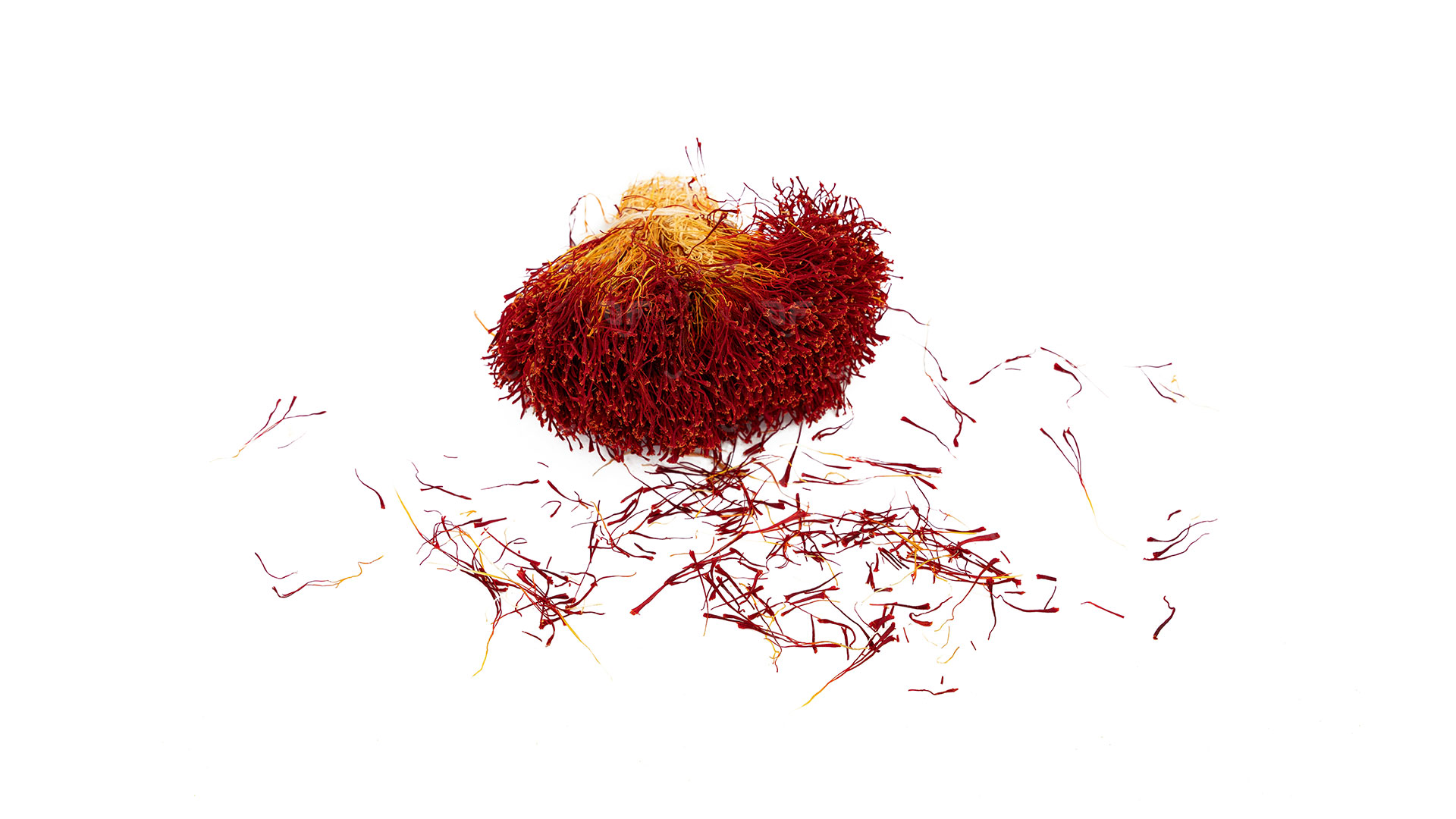
The different grades of Persian saffron do not represent different plant species. They usually describe which parts of the dried pistil remain and how they have been separated, cut, sorted, or bundled. The upper red portion is the stigma, while the lower portion becomes orange, yellow, and then pale toward the style. Long, separated red threads have a different appearance and red-material ratio from complete threads with pale style attached. These physical distinctions produced the familiar commercial names used in the Iranian saffron trade.
Physical appearance is only one part of commercial quality. A clean, uniform cut may suit premium retail packs, but it does not establish coloring strength, aroma, purity, moisture, or freshness. Harvest conditions, drying, handling, storage, and age can affect the product. The different grades of Persian saffron are useful descriptions of product form, not substitutes for a specification sheet or batch test. Buyers need a clearly defined commercial cut and evidence that the supplied lot meets the agreed analytical and physical requirements.
Different Grades of Persian Saffron Explained
Terminology for different grades of Persian saffron is not fully uniform across suppliers and markets. Some sellers separate Super Negin from Negin, while others use broader categories or their own subgrades. The descriptions below reflect common commercial usage, not guaranteed ISO classifications. Buyers should define thread length, uniformity, breakage, and style content in the purchase specification. They should not assume that every lot sold under the same name will reliably produce identical color, taste, or aroma without supporting batch data.
Super Negin Saffron
Super Negin commonly describes carefully sorted, long, thick, predominantly red threads with high visual uniformity and little visible pale style. Its appearance can suit premium retail packs and products in which customers can see the complete threads. The term is a commercial designation, and its definition may vary between suppliers. Buyers should specify acceptable thread length, breakage, color uniformity, foreign matter, and analytical requirements. The label alone does not prove a particular coloring-strength value, aroma level, or standardized quality class.
Negin Saffron
Negin consists mainly of long red stigma portions separated from the lighter style. Compared with Super Negin, it may have less uniformity in thread length, width, straightness, or presentation, depending on the supplier’s classification. It can suit retail, food-service, and repacking applications where recognizable red threads matter. B2B buyers should ask how the supplier distinguishes Negin from Super Negin and whether the distinction is based on sorting and appearance or also on batch measurements.
Sargol Saffron
Sargol generally refers to separated red stigma tips with the yellow and pale style removed. Its threads are often shorter or more fragmented than Negin, although both products are predominantly red. Sargol may suit buyers who value coloring performance and red-material content more than long, uniform threads. Applications can include restaurants, spice blends, repacking, and food processing when the batch meets the required specification. Sargol should not be ranked automatically against Negin; appearance, laboratory results, consistency, and cost-in-use determine commercial suitability.
Pushal Saffron
Pushal contains the red stigma with part of the orange or yellow style attached. Its mixed-color appearance distinguishes it from all-red cuts such as Negin and Sargol. Because some product weight comes from the lighter section, buyers should compare measured performance and usable yield, not price per kilogram alone. Pushal may suit applications where an all-red presentation is unnecessary and the specification permits attached style. Buyers should agree on the red-to-yellow ratio, thread condition, and analytical results because commercial interpretations of Pushal can differ.
Dasteh or Bunch Saffron
Dasteh, or Bunch saffron, is a more complete presentation retaining the red stigma and a longer pale portion. The threads are traditionally gathered into small bundles, revealing more of the pistil structure than separated grades. Its greater proportion of style generally means less red stigma by total weight, which affects commercial comparisons. Dasteh may interest buyers seeking a traditional form or value category, but its suitability should be judged through agreed composition, cleanliness, sensory condition, and analytical specifications rather than appearance alone.
Style or Konj
Style, sometimes traded as Konj or described informally as white saffron, consists mainly of the pale lower portion left after separating the red stigma. It has a different composition and commercial function from the red material buyers usually expect. The term should be used precisely, without implying that Style is equivalent to Negin, Sargol, or another red-stigma grade. Companies considering it should define the application, verify its permitted name in the destination market, and obtain specifications describing its contents, purity, and intended use.
Comparing Persian Saffron Grades for Commercial Use
No single grade is right for every buyer. A retailer may prioritize long, uniform threads visible through the package, while a manufacturer may care more about repeatable coloring performance and dosage. Restaurants may require dependable flavor and aroma without paying for presentation that disappears during preparation. When comparing the different grades of Persian saffron, procurement teams should connect the physical cut to the finished product, customer expectations, processing method, and required evidence. The following distinctions provide a practical starting point.
- Premium retail and visible-thread products:
Super Negin or Negin may support an upscale presentation when long, predominantly red threads are part of the selling proposition. Buyers should still define visual tolerances and request batch results, since an attractive sample does not guarantee consistent analytical performance across later shipments.
- Restaurants and food service:
Sargol or Negin may be appropriate when red stigma content and preparation performance matter more than perfectly uniform threads. The better commercial option depends on measured color, aroma, dosage, price, and consistency, so kitchens should test representative samples in their actual recipes before committing to volume.
- Food manufacturing and blending:
Manufacturers should prioritize documented purity, batch consistency, measured coloring strength, format, and compatibility with the production process. Shorter threads or powder may be practical, but powder requires careful authenticity controls because its original plant structure is no longer visually available for routine inspection.
Persian Saffron Grades and Standardized Quality Testing
Commercial names and international quality classes answer different questions. Super Negin, Negin, Sargol, Pushal, and Dasteh describe how Persian saffron is cut and presented. ISO 3632 and the Codex standard address specific physical and chemical requirements for filaments, cut filaments, and powder. A supplier may use both systems, but one is not an automatic translation of the other. To compare different grades of Persian saffron, buyers need a defined commercial cut and results showing the quality of the offered batch.
Color, Taste, and Aroma Indicators
Saffron assessment commonly considers compounds associated with color, taste, and aroma. Crocetin esters, often discussed through crocin or coloring strength, influence the color released during use. Picrocrocin contributes to saffron’s bitter taste, while safranal is an important aroma compound. These measurements help buyers compare lots reliably, but the test method and product condition matter. Research shows that safranal results can vary by method, so buyers should not treat one number or a commercial grade name as a complete sensory guarantee.
Physical Quality, Purity, and Authenticity
Laboratory figures should be reviewed with physical and safety criteria. Relevant factors may include moisture, foreign matter, floral waste, thread form, sensory condition, and adulteration evidence, depending on the standard and market. Authenticity deserves attention because suspicious saffron samples have appeared in official European controls. Informal checks using water, smell, or appearance may reveal obvious problems, but they cannot replace suitable analysis and supplier documentation. For B2B orders, clear lot identification and acceptance procedures should connect the approved sample, written specification, and delivered batch.
What B2B Buyers Should Request from a Persian Saffron Supplier
A useful inquiry about the different grades of Persian saffron should describe the product more precisely than “premium Persian saffron.” Buyers can reduce misunderstandings by stating the commercial grade, application, form, quality standard, test requirements, and acceptable physical characteristics. They should also identify the expected order size and destination because these details can affect documentation and logistics. JAM Food Co. supplies different saffron grades, but its commercial terms and batch capabilities require direct confirmation. Before approving an order, procurement teams should request the information relevant to their quality system and market.
- Product definition and sample:
Ask for the exact grade, thread or powder form, visual characteristics, and a representative sample. The approved sample should be associated with written acceptance criteria so that later deliveries can be assessed consistently. Confirm which grades, product forms, and sample arrangements JAM Food Co. currently provides.
- Specification and test evidence:
Request a product specification and batch-specific certificate of analysis showing the agreed quality parameters and test methods. Buyers should also ask how purity and authenticity are verified and which laboratory records, quality-control documents, specifications, or certifications JAM Food Co. can provide for the offered lot.
- Commercial and supply conditions:
Confirm available packaging, minimum order quantity, lead time, traceability, shelf life, storage instructions, and export documentation before purchase. JAM Food Co. should confirm which options, terms, records, and destination-market arrangements apply to the offered product before the buyer places an order.
Packaging and Storage Considerations for Bulk Saffron
Saffron packaging should protect the product during storage and transport without introducing contamination, migration, or foreign odour throughout the agreed distribution and storage period. Moisture, light, oxygen, heat, and surrounding aromas can affect product condition, so packaging and storage should address these risks. The appropriate material, pack size, seal, and secondary packaging depend on order volume, distribution, and repacking. Buyers should obtain written instructions for the specific lot instead of applying an assumed shelf life to every grade or package.
Receiving procedures matter as much as the initial package. For every shipment, buyers should carefully check seal integrity, lot identification, declared weight, cleanliness, and conformity with the approved specification. Warehouses should follow validated temperature, humidity, light, and handling instructions and prevent contact with strong-smelling products. Claims about available pack sizes, shelf life, or storage conditions for JAM Food Co. products require company confirmation. Buyers should request the relevant packaging details and product-specific storage and transport instructions before finalizing an order.
Frequently Asked Questions About Persian Saffron Grades
Is Super Negin Always the Highest-Quality Persian Saffron?
Super Negin commonly represents the most visually selective commercial presentation, with long, uniform, predominantly red threads. That does not mean every product carrying the label will outperform every Negin or Sargol batch in color, aroma, purity, or consistency. The term is not a complete laboratory specification, and suppliers may apply it differently. A B2B buyer should evaluate the label together with a representative sample, physical tolerances, test results, product age, storage history, and delivered price. Super Negin can be the preferred presentation, but its suitability and value must be demonstrated for the buyer’s application.
What Is the Main Difference Between Negin and Sargol Saffron?
Both grades are mainly composed of the red stigma, but their physical presentation usually differs. Negin generally has longer, more intact threads, while Sargol consists of shorter red tips or cut filaments. Negin may therefore be favored when visible thread length and uniformity support retail positioning. Sargol may suit uses where all-red material and processing performance matter more than long-thread presentation. These are commercial tendencies rather than guarantees of chemical performance. Buyers should compare actual samples and batch results because a well-tested Sargol lot may fit a particular application better than a visually attractive Negin lot.
Are Different Grades of Persian Saffron the Same as ISO Quality Classes?
No. Persian names such as Negin, Sargol, Pushal, and Dasteh describe commercial cuts and visible composition. ISO 3632 provides standardized requirements for dried saffron and applies to forms including filaments, cut filaments, and powder. Codex also sets quality and safety-related provisions for dried saffron. A commercial grade can be tested against a standard, but its name does not automatically prove that it meets a particular class. Buyers should request the applicable standard, test method, numerical results, and batch identification rather than accept an unsupported statement that a Persian trade name equals an ISO category.
Which Persian Saffron Grade Is Suitable for Food Manufacturing?
The answer depends on the product formula and manufacturing process. A producer of visible premium products may prefer longer red threads, while a sauce, beverage, dairy, bakery, or spice-blend manufacturer may place greater weight on coloring performance, flavor profile, dosage, purity, and repeatability. Sargol, Negin, another filament form, or a verified powder could potentially meet those needs, but the choice should follow production trials. Manufacturers should compare samples under real processing conditions and set specifications for the attributes that affect the finished product instead of choosing solely by the grade’s position in a commercial hierarchy.
What Documents Should a Wholesale Saffron Buyer Request?
The appropriate document package depends on the destination market and the buyer’s quality system. Common requests may include a product specification, batch certificate of analysis, lot identification, origin and traceability information, storage instructions, shelf-life statement, and documents needed for import or food-safety review. Buyers may also require evidence supporting purity, authenticity, contaminant compliance, or a claimed certification. None of these documents should be assumed from the supplier’s general product description. JAM Food Co. must confirm which records are available for the offered lot and whether they satisfy the buyer’s regulatory and contractual requirements.
Selecting the Right Persian Saffron Grade for Your Business
Understanding the different grades of Persian saffron helps buyers connect thread appearance with presentation, processing needs, measured performance, and cost-in-use. Super Negin, Negin, Sargol, Pushal, Dasteh, and Style describe useful commercial distinctions, but selection should also consider specifications, laboratory evidence, purity, packaging, and consistency. Business buyers can contact JAM Food Co. to discuss their specific saffron requirements. Share your application, required grade, quality criteria, destination, and expected volume so the company can confirm the relevant product information and commercial conditions.
HOW CAN JAM GROUP HELP YOU?
Send us a message and our friendly team will get back to you within one business day.




