










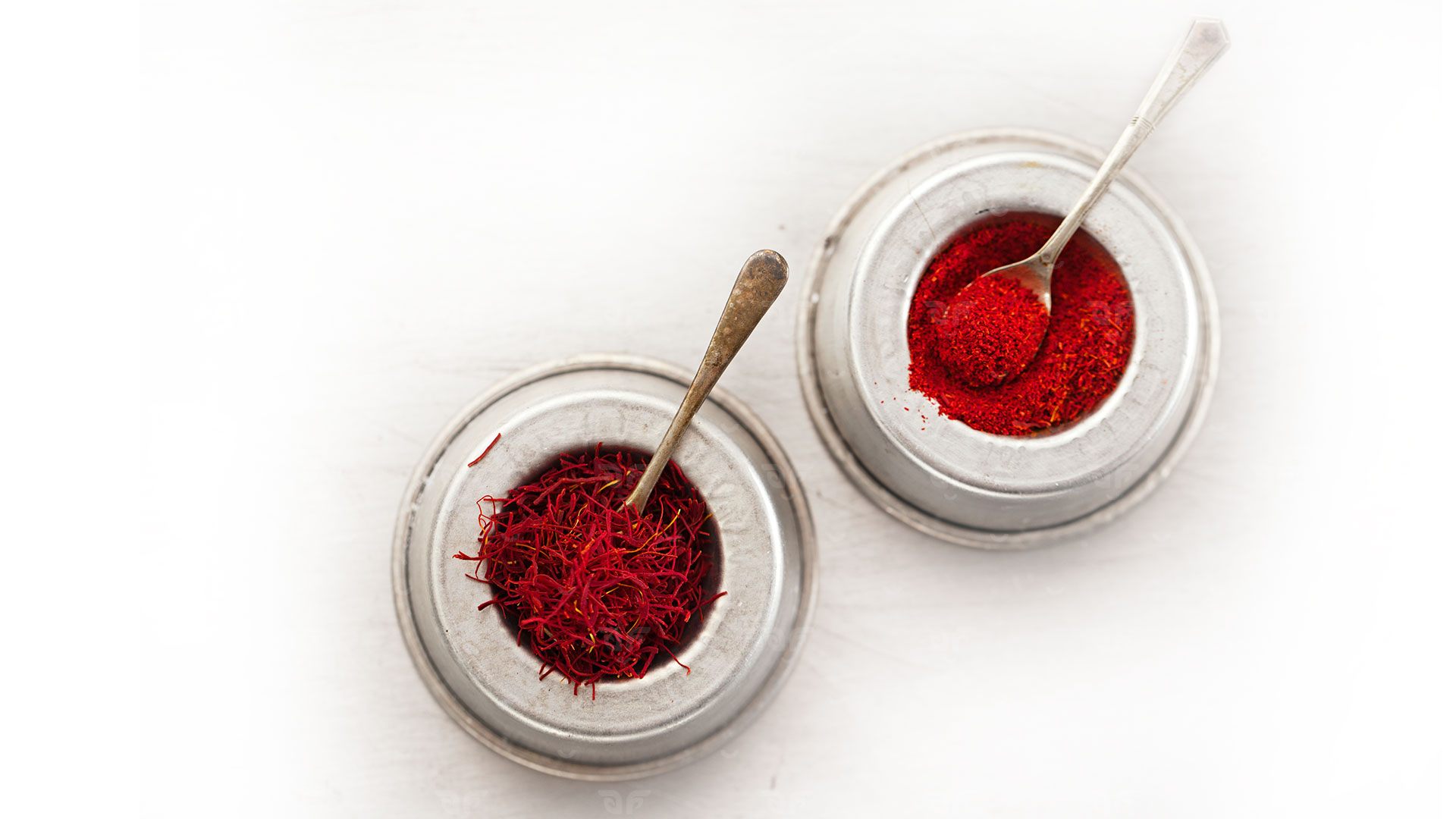
Saffron Powder vs Saffron Threads; Three Key Differences
Choosing between saffron powder and whole threads sounds simple until the product reaches a production line, test kitchen, or receiving inspection. The two forms come from the same spice, but they don’t behave in exactly the same way. Particle size affects incorporation, intact threads preserve visible characteristics, and storage conditions can influence either product over time. A useful saffron powder vs saffron threads comparison must therefore go beyond convenience. Business buyers need to consider the application, required quality, dosing method, finished-product appearance, and evidence supplied with each lot.
For importers, manufacturers, distributors, and food-service buyers, settling those questions before requesting quotations can prevent an unsuitable product from moving too far through procurement. JAM Food Co. supplies saffron, making the company a relevant contact for businesses exploring their sourcing options. Buyers can approach JAM Food Co. with their intended application and purchasing requirements, then request the product information needed to evaluate a possible supply. First, though, it helps to separate two issues that are often mixed together: the physical form of saffron and its actual quality.
Saffron powder vs saffron threads at a glance
The short answer is that threads provide greater visibility, while powder can be easier to incorporate. That distinction matters, but it doesn’t tell the whole story. A thread product can vary in style, chemical strength, moisture, and condition. Powder can also vary in grade, purity, particle size, and uniformity. Buyers should therefore treat the table below as a comparison of handling characteristics, not as an automatic ranking of one form above the other.
| Comparison point | Saffron threads | Saffron powder |
| Physical form | Filaments or cut filaments | Crushed saffron particles |
| Visible characteristics | More morphology remains visible | Original filament shape is no longer visible |
| Incorporation | Often infused, bloomed, or ground before use | Can disperse more readily |
| Finished appearance | May remain visible in the food | Produces a more uniform appearance |
| Dosing | May require preparation before dosing | Often easier to weigh and blend |
| Verification | Supports visual examination | Relies more heavily on documentation and testing |
| Typical fit | Visible presentation, infusion, or later grinding | Blends, batters, sauces, drinks, or automated dosing |
| Main caution | Appearance doesn’t prove grade or purity | Powder can conceal unwanted plant material more easily |
The right choice depends on what happens after delivery. A food-service buyer may want visible threads as part of the serving experience, while a manufacturer producing a uniform bakery mix may prefer a finely divided ingredient. Neither preference answers the quality question. To make a sound comparison, buyers should examine products of known form and comparable specification, then test how each performs at the intended dosage under real processing conditions.
What changes when saffron is ground?
“Threads” is useful everyday language, but commercial standards make a finer distinction. Saffron may be offered as filaments, cut filaments, or powder. A filament is a dried stigma with part of the style attached, while a cut filament has the style removed. Powder consists of particles produced by crushing filaments. This matters because a quote for “saffron threads” may not describe precisely how much style remains or whether the product consists of complete or cut material. Clear product identification prevents two visibly different products from being compared as though they were identical.
Grinding reduces particle size and removes the original filament shape. The smaller particles can interact with liquid or other ingredients more readily, which may help with dispersion and extraction. At the same time, the buyer loses some of the visual information available in whole material. That trade-off sits at the centre of the comparison: powder may simplify processing, but it places more weight on the specification, lot documentation, sampling plan, and testing approach. Grinding changes how saffron is handled and assessed. It doesn’t automatically turn a conforming product into a higher or lower grade.
How the two forms perform in food production
Form becomes commercially meaningful when saffron meets a particular recipe and process. A powder that disperses well in one sauce may behave differently in a dry blend, and an infusion method that works in a restaurant may be inefficient on an industrial line. Temperature, contact time, liquid composition, dosage, mixing, and the food matrix can all influence the result. For this reason, a general claim that one form gives “more flavour” is less useful than an application trial using comparable material.
First Difference: Extraction and dispersion
Saffron’s colouring and sensory compounds must move from the spice into the surrounding food or liquid before they can contribute effectively. Smaller particles generally provide more contact with the food matrix, so powder may incorporate faster and more evenly. Threads are commonly infused or bloomed before addition, although they can also be ground closer to the time of use. The practical question is whether the process has enough time, mixing, and suitable liquid to achieve the desired result. A faster release doesn’t automatically produce a stronger final effect if dosage and underlying quality differ.
Second Difference: Dosing and batch consistency
Powder may be easier to weigh, divide, and distribute through a batch, especially when the product has a controlled particle size and good homogeneity. Threads can require a separate preparation stage, and their physical shape may make small-volume dosing less straightforward. Still, powder introduces its own questions: particles can vary in size, and a poorly mixed lot may not perform consistently. Manufacturers should evaluate repeatability at the actual batch scale instead of relying only on a bench sample. The goal is predictable performance from one production run to the next, not convenience in isolation.
Third Difference: Appearance and finished-product fit
Whole or cut threads can remain visible in rice dishes, sauces, desserts, and other products where saffron’s appearance contributes to presentation. That visibility may suit premium food service or retail products designed to show recognizable ingredients. Powder is generally more appropriate when the producer wants colour and flavour without visible strands, as in smooth beverages, bakery mixes, batters, and finely blended seasonings. These are starting points, not fixed rules. The same business may use threads in one product and powder in another because the desired appearance and production method are different.
Quality and authenticity: what buyers can and cannot verify
Threads preserve morphological features that disappear after grinding, so they give receiving staff more to examine. Shape, visible style material, colour distribution, and the presence of obvious foreign matter can all inform an initial inspection. Yet visual assessment has firm limits. It cannot establish chemical strength, confirm a commercial grade, or exclude every adulteration method. Powder increases the need for supporting evidence, but both forms should be evaluated through a proportionate combination of product specifications, representative sampling, documentation, and suitable analysis.
- Visible product identity:
Threads allow the buyer to examine the physical structure associated with saffron stigmas and notice conspicuous foreign material. This makes them easier to screen visually than powder. However, a plausible appearance is only one piece of evidence and shouldn’t be treated as confirmation of purity, grade, or origin.
- Hidden material in powder:
Once saffron is crushed, the original filament shape can no longer help the buyer identify unwanted botanical material. Documented saffron adulterants include safflower, calendula, turmeric, achiote, pepper, beet, and pomegranate materials. This doesn’t mean every powder is adulterated; it means supplier and lot verification carry more weight.
- Representative lot sampling:
Even a sound test method can produce an unhelpful result if the sample doesn’t represent the delivered lot. Buyers should define how samples are selected, combined, protected, and identified. This becomes especially important for larger shipments, where examining one container may say little about the rest of the consignment.
- Evidence matched to risk:
A certificate of analysis can support evaluation, but buyers should check what was measured, which method was used, and whether the document relates to the supplied lot. The appropriate evidence will depend on purchase value, intended use, destination-market rules, supplier history, and the buyer’s own quality programme.
Form is not grade: understanding specifications and standards
Current international references cover saffron in filament, cut-filament, and powdered forms. They assess characteristics linked to colour, taste, aroma, moisture, mineral residue, and soluble material. Crocin is associated with colouring strength, picrocrocin with taste strength, and safranal with aroma strength. These measures help classify and compare saffron, but they shouldn’t be reduced to a single headline number. A product must be considered against the complete agreed specification, including the form in which it is supplied and the test method used.
| Specification area | What it helps a buyer assess |
| Product style | Filament, cut filament, or powder |
| Crocin-related value | Colouring strength |
| Picrocrocin-related value | Taste strength |
| Safranal-related value | Aroma strength |
| Moisture | Condition and form-specific conformity |
| Total and acid-insoluble ash | Mineral residue and possible contamination indicators |
| Cold-water-soluble extract | Soluble material within the product |
| Foreign or extraneous matter | Unwanted material in the lot |
| Grade or class | Overall classification against the stated standard |
One detail is easy to miss: international criteria set different maximum moisture values for powdered and filament-style saffron. That alone shows why copying the same specification from one form to another can create problems. Buyers should also distinguish voluntary standards from legal requirements. ISO or Codex references can support a commercial specification, but they don’t replace the food safety, contaminant, pesticide-residue, microbiological, and labelling rules of the destination market. A purchase agreement should state which standard, edition, limits, and methods apply instead of referring vaguely to “international quality.”
Storage, packaging, and shelf-life considerations
Saffron’s quality can change during storage, and the physical form is only one part of that process. Temperature, humidity, light, oxygen exposure, initial condition, and packaging can all influence stability. Opening a large container repeatedly may expose the remaining product to different conditions from those used to establish its shelf life. Buyers should therefore examine the complete storage system: barrier protection, closure integrity, pack size, warehouse conditions, opening frequency, and expected stock rotation. A suitable pack for rapid industrial use may not be suitable for slow consumption after opening.
Powder is often described online as having a fixed, shorter shelf life than threads. That may sound tidy, but universal figures hide too many variables. Grinding can increase exposure of the material, while well-designed packaging and controlled storage may limit that effect. Threads can also deteriorate when exposed to unsuitable conditions. The more useful question is whether the supplier has defined a shelf life for the particular product in its actual package and under stated storage conditions. Buyers can then check whether those conditions match transport, warehousing, repacking, and use.
Buyer tip: Treat shelf life as a product-and-package claim, not a number attached to the word “powder” or “threads.” Check the manufacturing or packing date, stated storage conditions, pack integrity, and expected period after opening before comparing two offers.
Choosing the right form for your application
A practical selection starts with the finished product, then works backward through processing and procurement. Does the customer expect to see threads? Must the saffron pass through fine dosing equipment? Will it be dispersed into liquid, mixed into a dry base, or infused separately? How quickly will an opened pack be consumed? These questions reveal which differences matter and which are merely theoretical. The following examples can help buyers frame an initial decision, but a representative trial should confirm the choice.
| Application or priority | Likely starting point | Reason to evaluate it |
| Premium rice or plated dishes | Threads | Visible saffron may support presentation |
| Smooth sauces and beverages | Powder | Easier distribution without visible strands |
| Bakery mixes and batters | Powder | May blend more uniformly through the base |
| Spice and seasoning blends | Powder | Compatible physical form for dry mixing |
| Retail presentation | Threads | Buyers can see more of the product structure |
| In-house controlled grinding | Threads | Preserves morphology until processing |
| Rapid automated dosing | Powder | May be easier to meter consistently |
| Strong incoming visual inspection | Threads | More physical characteristics remain visible |
These recommendations aren’t substitutes for testing. A producer may find that an infusion of threads gives the preferred result in a beverage, or that a particular powder needs changes to mixing time. Compare the forms at an equivalent agreed dosage and record colour, aroma, flavour, distribution, processing time, waste, and handling. The commercial winner is the option that meets the specification and works reliably in the real process. It may not be the product with the lowest price per kilogram.
Frequently asked questions about saffron powder and threads
Is saffron powder stronger than threads?
Not necessarily. Grinding can help saffron interact with a food matrix more quickly, but strength also depends on grade, chemical composition, age, storage, dosage, and preparation. Compare verified products at equivalent use levels before drawing a conclusion.
Is saffron powder always adulterated?
No. Genuine saffron powder is a recognized product form. The concern is that grinding removes visible morphological clues, which can make unwanted botanical material harder to identify. This increases the importance of credible supplier documentation, representative sampling, and suitable testing.
Can saffron threads be ground before production?
Yes. Buying threads and grinding them closer to use may suit businesses that want to inspect the whole material first. The buyer must still consider labour, equipment, sanitation, contamination control, particle-size consistency, and the effect of adding another processing step.
Which form lasts longer?
There is no reliable universal answer for every product. Form may influence exposure, but shelf life also depends on initial quality, packaging, temperature, humidity, light, oxygen, and opening frequency. Compare supplier-supported shelf-life information for the actual packaged products.
Can both forms meet ISO or Codex quality criteria?
Yes. International saffron references cover filament, cut-filament, and powder forms. A physical form doesn’t guarantee conformity, however. The individual lot must meet the applicable requirements and be assessed using the stated methods.
Discuss your saffron requirements with JAM Food Co.
The best choice between saffron powder and saffron threads comes down to the application. Threads provide more visible product information and may suit presentation or later grinding. Powder can simplify dispersion, blending, and dosing, but it calls for close attention to specification and verification. Whichever form a buyer prefers, comparable quality evidence and a realistic production trial matter more than a generic claim that one is “best.” JAM Food Co. supplies both of these forms, offering business buyers a direct starting point for their sourcing enquiry. Please feel free to contact JAM Food Co. to discuss your intended application and request the product information needed to evaluate a purchase.
HOW CAN JAM GROUP HELP YOU?
Send us a message and our friendly team will get back to you within one business day.




