










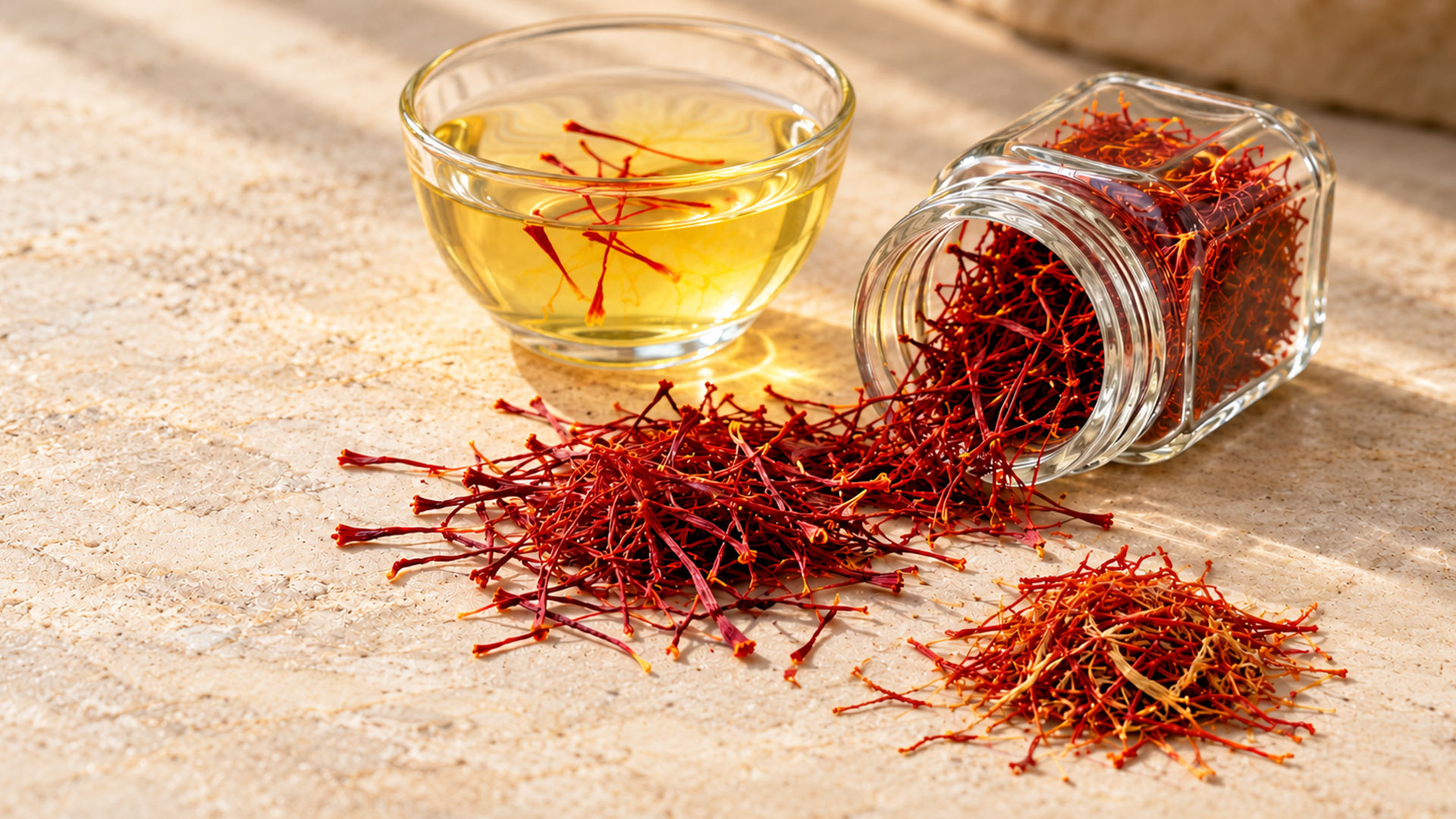
How to Identify Pure Saffron: A Guide To Save Your Money
Pure saffron can be difficult to judge from a product photo or a quick glance at a sample. Dyed plant fibers, cheaper botanical materials, added coatings, and lower-quality saffron can all resemble a more valuable product. Therefore learning how to identify pure saffron gains importance. It starts with several useful observations: the shape of the threads, their aroma and taste, and the way their color develops in water. Yet these checks have limits. For a business buyer, the real question is not simply whether a few threads look convincing, but whether the evidence supports the identity and condition of the commercial lot being considered.
That distinction matters when saffron will be resold, used in manufacturing, or presented on a food-service menu. An incorrect purchasing decision can affect flavor, color consistency, labeling, cost control, and customer confidence. Therefore, we are proud to introduce JAM Food Co. to you. This company supplies saffron as part of its food-product range. Business buyers comparing saffron supply options can contact the company to discuss their requirements and request current product information. This guide explains how to screen saffron intelligently, where informal tests fall short, and what stronger verification looks like. Buyers can then approach supplier discussions with clearer questions and a better understanding of the evidence they need.
What “Pure Saffron” Actually Means?
Saffron is the dried material obtained from the pistils of Crocus sativus L. flowers. In trade, it may be offered as filaments, cut filaments, or powder. When buyers describe saffron as pure, they usually mean that it has not been substituted, extended with foreign material, artificially colored, coated to increase its weight, or mixed with undeclared ingredients. Botanical authenticity is part of that picture: the material should genuinely come from the named plant and the relevant floral part. This definition sounds straightforward, but several related commercial terms can blur the issue if they are used without explanation.
Purity, quality, grade, and origin do not prove the same thing. Quality measurements may describe coloring strength, bitterness, aroma, moisture, or physical condition. A grade organizes some of those characteristics, while an origin claim states where the product was grown or processed. None of these claims automatically answers every purity question. A saffron sample could have strong color yet still require further investigation for foreign material, or it could be botanically authentic but poorly stored. Buyers should therefore define each requirement separately in the purchasing specification instead of relying on broad descriptions such as “premium” or “top quality.”
How to Identify Pure Saffron During a Preliminary Inspection?
A preliminary inspection can reveal obvious problems before a buyer commits to a larger order or more costly analysis. A better approach combines several observations instead of depending on one dramatic home test. Examine the threads, assess the aroma and taste carefully, and observe a controlled water infusion. If the results conflict, treat that inconsistency as a reason to investigate. Even when every observation appears normal, remember what this stage can establish: it can support or weaken confidence in a sample, but it cannot certify the purity of the entire lot.
Examine the shape and surface of the threads
Authentic saffron threads come from a flower stigma, so they should not look like perfectly uniform pieces of string. A genuine filament typically widens toward a trumpet-like end. Under magnification, the wider margin may appear serrated, with fine surface structures and a naturally irregular texture. Color can range across deep red and orange-red tones, and some lighter style material may be present depending on how the saffron was separated and prepared. A completely uniform appearance deserves attention, but color alone is not decisive because genuine material varies and imitation fibers can be deliberately dyed to look convincing.
Magnification makes this inspection more useful. It may expose flat strips, smooth synthetic-looking fibers, or plant material that lacks the expected stigma structure. Still, morphology is a screening method. Some botanical substitutes can imitate parts of saffron’s appearance, and cut or damaged threads may not display every feature clearly. This is also why visual inspection becomes much less informative after grinding. For a buyer comparing samples, record what was examined and use consistent lighting and magnification. A repeatable inspection is more meaningful than an impression formed from a staged photograph or a few selected threads.
Assess aroma and taste carefully
Saffron’s sensory profile comes from several characteristic compounds. Safranal is closely associated with its aroma, while picrocrocin contributes bitterness. Buyers often describe genuine saffron as having a distinctive warm, hay-like, honeyed, or earthy aroma, but sensory language is subjective. The important point is balance and character, not whether every person chooses the same descriptive word. An obviously perfumed, sugary, musty, or nearly odorless sample warrants a closer look. Taste only a very small amount from a sample considered safe for evaluation; authentic saffron is characteristically bitter rather than sweet.
Aroma and taste cannot explain the cause of every difference. Drying conditions influence how saffron’s aromatic compounds develop, while light, oxygen, humidity, temperature, and storage time can change the product after processing. Weak aroma may therefore reflect age or unsuitable storage rather than botanical substitution. Conversely, a strong smell does not prove purity because added fragrance or a blended lot could mislead a quick assessment. For procurement teams, sensory checking works best as a comparison tool: evaluate samples consistently, retain an approved reference where appropriate, and investigate material that departs noticeably from the agreed profile.
Use the water test as a screen, not proof
The water test is popular because saffron’s crocins are water-soluble pigments. When authentic threads are placed in water, they release a yellow to golden color into the liquid. A sample that immediately produces an unusually bright red cloud may carry a surface dye, especially if the threads quickly become pale or reveal a different material underneath. That is a useful warning sign. However, online rules that prescribe one exact release time are too simple. Water temperature, thread size, agitation, grinding, processing, age, and the quantity used can all influence the speed and intensity of extraction.
The test also cannot detect every form of fraud. A mixture may contain genuine saffron alongside cheaper plant material, or an adulterant may be chosen because its behavior looks plausible in water. Genuine threads will naturally give up pigment during a prolonged infusion, so some fading does not automatically mean the product is fake. Run the comparison under controlled conditions and judge the complete pattern: liquid color, thread structure, aroma, and any suspicious surface bleeding. Avoid improvised tests involving gasoline, petrol, or hazardous chemicals. If a result affects a commercial decision, laboratory evidence is the appropriate next step.
What are the Common Ways to Adulterate Saffron?
Saffron’s high value creates an incentive to replace it, extend it with cheaper material, manipulate its appearance, or misrepresent what is being sold. These practices don’t all leave the same clues, which is why one inspection or test cannot address every risk. For buyers, it helps to separate the main forms of adulteration and misrepresentation before deciding what evidence to request. That distinction also helps procurement teams connect each concern to the right supplier question, document, inspection step, or laboratory method.
- Botanical substitution:
Reported adulterants include safflower, marigold, turmeric, paprika, gardenia-derived material, other Crocus species, and non-stigma parts of the saffron flower. They may be added as powders or shaped and dyed to resemble threads. Lower-quality saffron may also be blended into material sold as a higher category.
- Color and weight manipulation:
Foreign fibers or lower-value material may be treated with natural or synthetic dyes to imitate saffron’s appearance or coloring performance. Oils, sugar, salt, or excess moisture may be added to increase saleable weight. Greasiness, sweetness, clumping, or immediate surface bleeding can raise suspicion, but cannot identify the addition with certainty.
- Grade and origin misrepresentation:
Genuine saffron may still be sold under an unsupported geographic claim or presented as a category it does not meet. Appearance and routine quality measurements cannot reliably confirm origin. When region or grade affects labeling, expectations, or price, buyers should require separate traceability and evidence for each claim.
Are saffron threads safer to buy than powder?
Threads give buyers more visible information because their shape, texture, color variation, and overall structure can be examined directly. Powder removes those clues and makes cheaper ground materials easier to conceal. Even so, product form alone cannot prove purity. Threads may contain dyed fibers, coatings, foreign flower parts, or convincing botanical substitutes, while powdered saffron can be genuine. The better purchasing question is whether the chosen form suits the application and whether the verification process addresses the risks that come with it.
- Threads:
Their widened ends, irregular texture, and natural variation make visual inspection more informative. Obvious foreign fibers may be easier to spot before the product enters processing or resale. Some buyers also purchase threads and grind them in-house, although this introduces extra handling and consistency requirements.
- Powder:
Manufacturers may prefer powder for easier dosing and dispersion, but it generally needs stronger verification. Turmeric, paprika, safflower, salt, and dyes are among the materials reported in adulterated powder. Buyers can manage this risk through tighter specifications, lot-specific documentation, and testing chosen for likely adulterants.
Why laboratory testing matters for commercial saffron?
Informal checks assess a small sample through appearance, aroma, taste, or behavior in water. Laboratory methods can measure defined quality characteristics and investigate evidence that the senses cannot judge reliably. This becomes more important as order value, production exposure, or labeling risk increases. Buyers do not need every available technique for every lot. The testing plan should instead begin with a clear question: does the business need to assess quality, confirm botanical identity, detect an added dye, identify foreign plant material, or investigate an origin claim?
What ISO 3632 can tell a buyer?
ISO 3632 gives buyers and suppliers a shared technical basis for discussing dried saffron. ISO 3632-1:2025 covers specifications for filaments, cut filaments, and powder, while ISO 3632-2:2010 describes test methods for those forms. This is more useful than depending on broad marketing descriptions, but the reference must be applied clearly. Buyers should know which edition and method were used, which sample was tested, and how the reported values relate to the agreed purchasing specification.
- Quality assessment:
Measurements associated with coloring strength, bitterness, aroma, moisture, and other physical or chemical characteristics can support saffron classification and quality evaluation. Naming the relevant ISO standard and edition in the purchase specification gives both parties a clearer basis for comparing results and resolving disagreements.
- Report interpretation:
A useful report identifies the sample or lot, test date, method, and measured results. A general statement such as “ISO tested” provides much less assurance than a lot-specific certificate whose values can be checked against the buyer’s specification and linked to the material offered or delivered.
- Analytical limits:
ISO 3632 is an important foundation, but it is not a universal guarantee against every form of fraud. Standard spectrophotometric measurements may fail to reveal certain botanical adulterants or complex mixtures. Product form and supply risk should guide the decision to request complementary authenticity testing.
When complementary tests may be needed?
Different tests answer different questions. Microscopy examines physical structures, DNA-based methods investigate botanical identity, and chemical techniques can target characteristic compounds, dyes, or adulterant markers. Their strengths and limits vary with the product form, processing history, suspected problem, and required detection level. Therefore, the goal is not to order the largest possible test panel. It is to choose evidence that addresses the actual purchasing risk and provides enough confidence for the intended use, order value, and consequences of an incorrect result.
- Microscopy:
Magnified examination can help distinguish saffron stigmas from some look-alike materials by comparing their physical structures. It is particularly relevant to threads and cut filaments, although damage and processing can obscure useful features. Microscopy can support authentication, but it may not quantify purity or identify every substitute.
- DNA-based methods:
These methods can help confirm botanical identity or detect foreign plant species. However, processing may damage DNA, and plant extracts may leave too little suitable genetic material for dependable detection. A negative result should therefore be interpreted in light of the sample form and the method’s limitations.
- Chemical analysis:
Chromatographic and mass-spectrometry methods can target saffron compounds, artificial dyes, or chemical markers linked to particular adulterants. They are useful when visual or genetic methods cannot answer the commercial question. The laboratory should select the method according to the suspected material and the required level of detection.
- Origin verification:
Geographic origin requires separate evidence. Stable-isotope and multi-element analysis can compare a sample with regional reference patterns, but natural overlap and the quality of reference data affect interpretation. Purity results should not be presented as proof of origin unless the method was specifically designed to assess that claim.
How B2B Buyers Can Evaluate a Saffron Lot and Supplier?
A dependable purchasing process connects the product specification, sample, analytical evidence, supplier information, and delivered lot. If one link is missing, a technically impressive result may provide less assurance than it first appears. The depth of control should also match the buyer’s exposure. A restaurant purchasing a small quantity and a manufacturer using saffron across a branded range may reasonably need different sampling, documentation, and testing arrangements. The following steps help turn general authenticity concerns into a process that procurement and quality teams can apply consistently.
- Define the specification:
Identify the botanical name, relevant plant part, product form, required quality characteristics, test methods, and any limits important to the target market or application. State origin requirements separately. This prevents the buyer and supplier from using the same broad quality term while expecting different products.
- Connect the certificate to the lot:
Check that the report identifies the sample or lot and can be matched to the offered material, invoice, packaging, or shipping records. Review who performed the analysis, when testing occurred, which methods were used, and whether measured values replace an unexplained pass mark.
- Evaluate the supplier’s evidence:
Ask how lots are identified, how origin and product-form claims are supported, and how sourcing or processing changes are communicated. For higher-risk purchases, an approved pre-shipment sample, incoming inspection, and retained reference sample can help buyers investigate discrepancies and compare the delivered material with what was approved.
- Check receipt and storage:
Inspect packaging identifiers, visible condition, aroma, and agreed analytical results before the lot enters production or resale. Then protect the product from light, oxygen, humidity, and unsuitable temperatures. Connected procurement and storage records help distinguish a supplier issue from quality loss that occurred after delivery.
Frequently asked questions about pure saffron
Does pure saffron turn water red or yellow?
Authentic saffron normally gives water a yellow to golden color as its crocins dissolve. Immediate bright-red bleeding can be a warning sign for surface dye, but color alone cannot prove purity or identify every type of adulteration.
Do genuine saffron threads lose color when soaked?
They can fade as pigment moves into the water, especially during a longer infusion. A claim that real threads must remain fully red is too absolute. Examine their underlying structure and the overall behavior of the sample instead.
Is very cheap saffron always fake?
No. Price can be a useful risk signal, but it is not an authenticity test. Form, grade, origin, age, contract size, and market conditions can affect the offer. Unusually low pricing should prompt stronger verification.
Can powdered saffron be pure?
Yes, powdered saffron can be authentic and pure. It is simply harder to inspect visually and easier to blend with other powders, so buyers usually need stronger documentation and a more deliberate testing plan.
Does ISO Grade I prove saffron is unadulterated?
No single grade should be treated as complete proof against every adulterant. ISO measurements provide important quality information, but complementary methods may be needed when botanical substitution, dyes, complex mixtures, or origin misrepresentation are concerns.
Can appearance confirm saffron’s country of origin?
No. Appearance may support a general product assessment, but geographic origin requires traceability and, in some cases, specialized analytical evidence. A purity result and an origin claim should be evaluated as separate matters.
Choose evidence that matches the purchasing risk
Knowing how to identify pure saffron begins with attentive inspection, but a sound B2B decision goes further. Thread shape, aroma, taste, and water behavior can expose warning signs; specifications, representative samples, lot-linked documents, and appropriate laboratory methods provide stronger commercial assurance. The right level of verification depends on the product form, intended use, order value, and consequences of a failed lot. JAM Food Co. supplies saffron and welcomes discussions with business buyers exploring suitable food-product options. Contact JAM Food Co. to share your saffron requirements and request current product information relevant to your purchasing decision.
HOW CAN JAM GROUP HELP YOU?
Send us a message and our friendly team will get back to you within one business day.




